Imagined Environments: The Making of the Borderlands
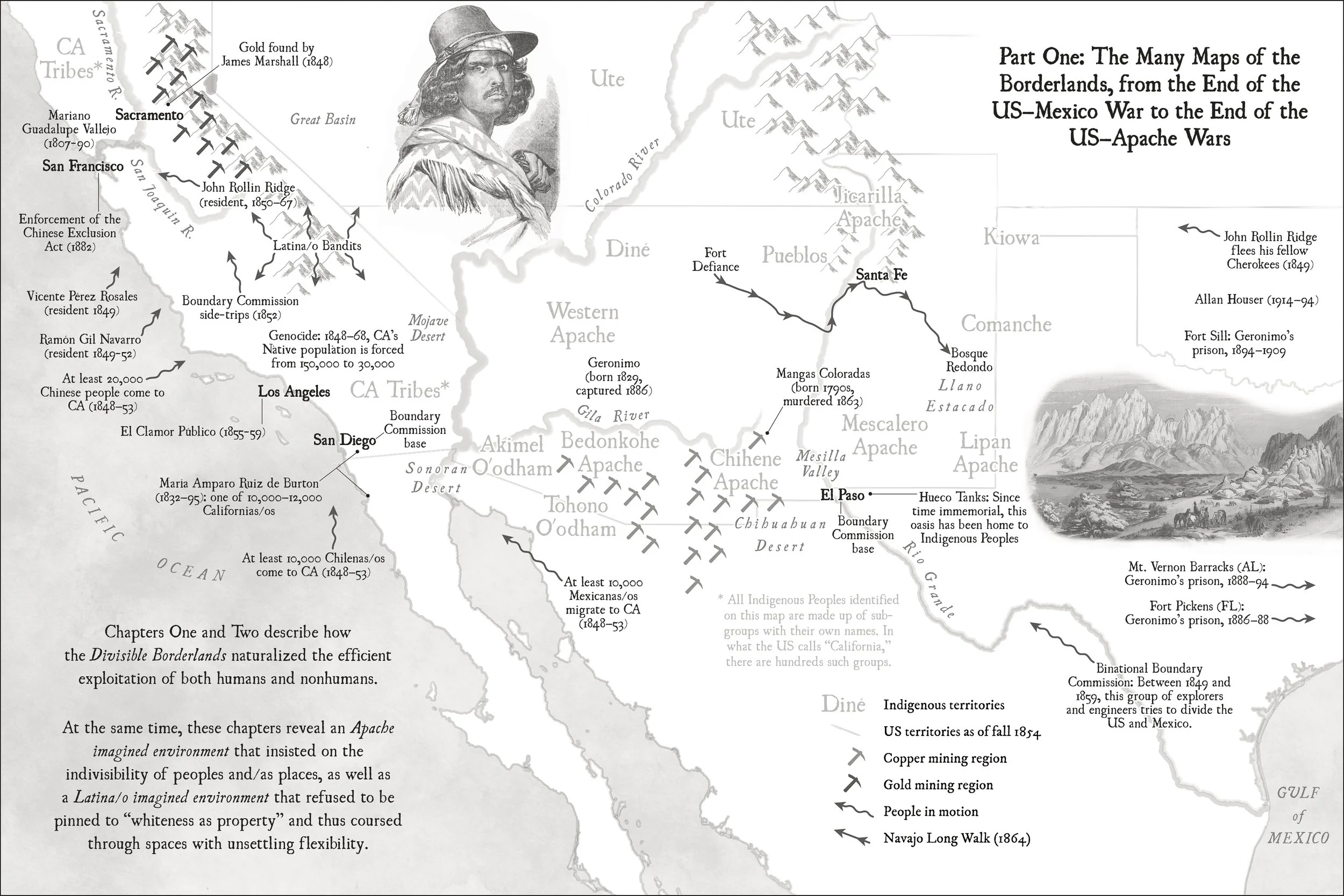
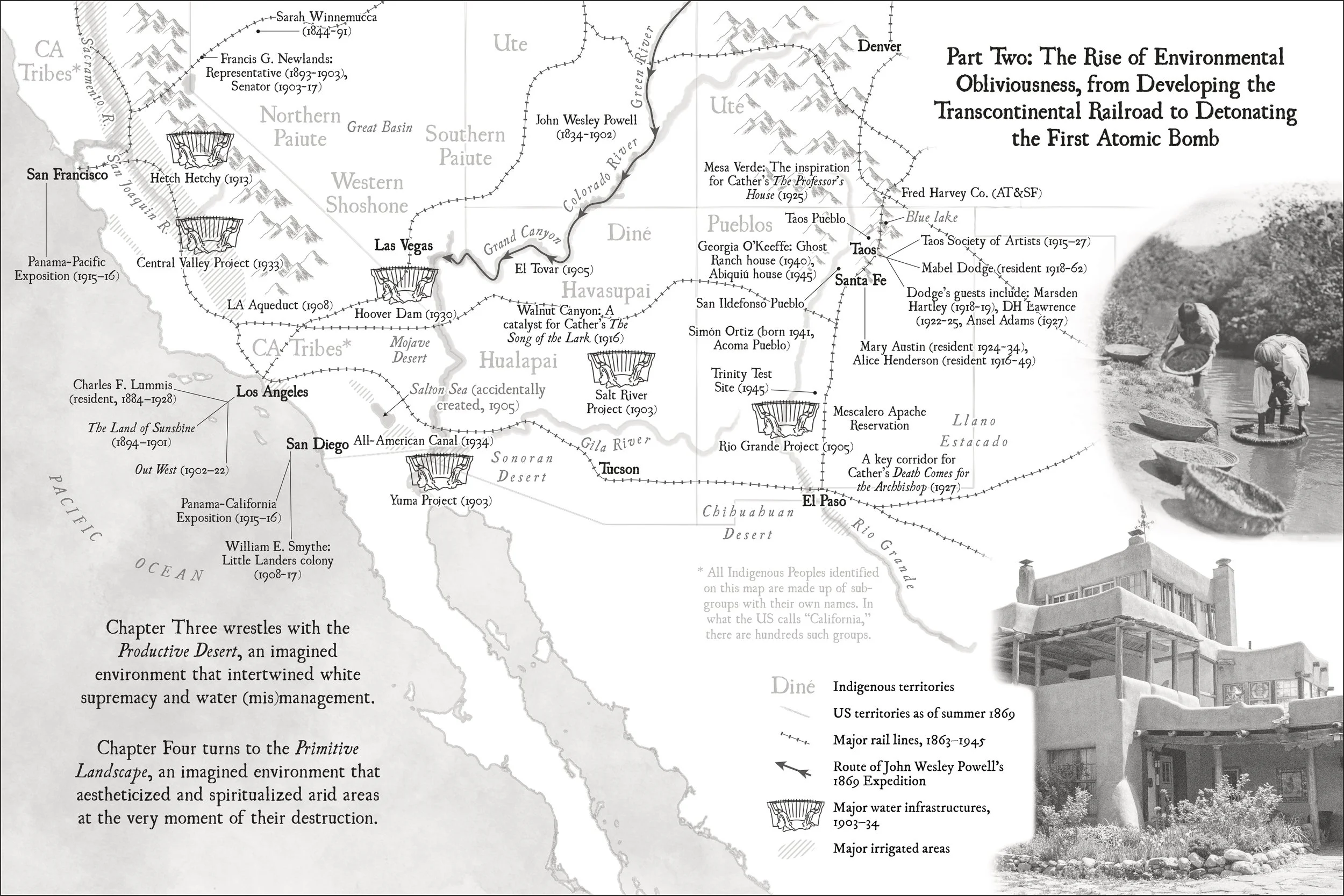
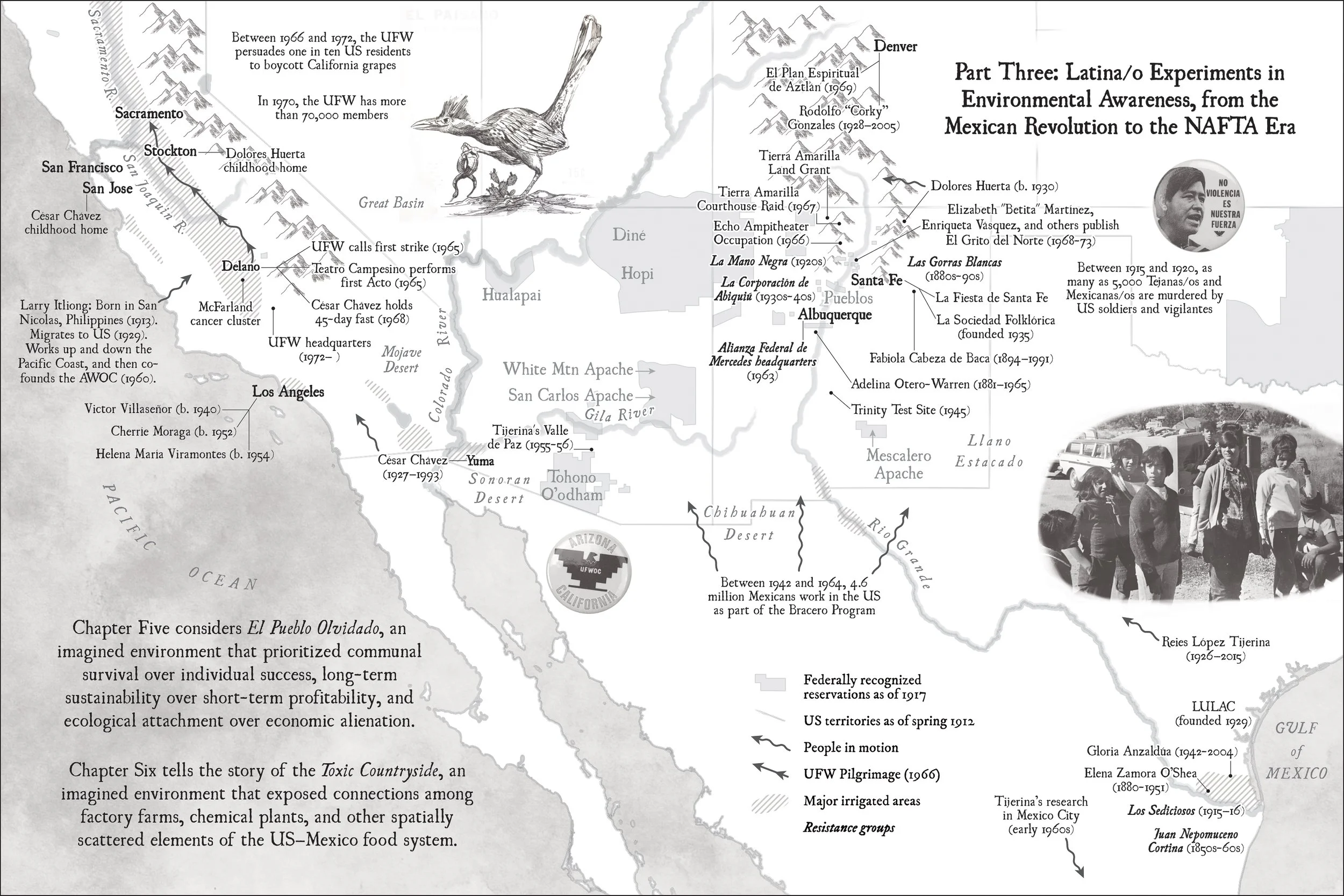
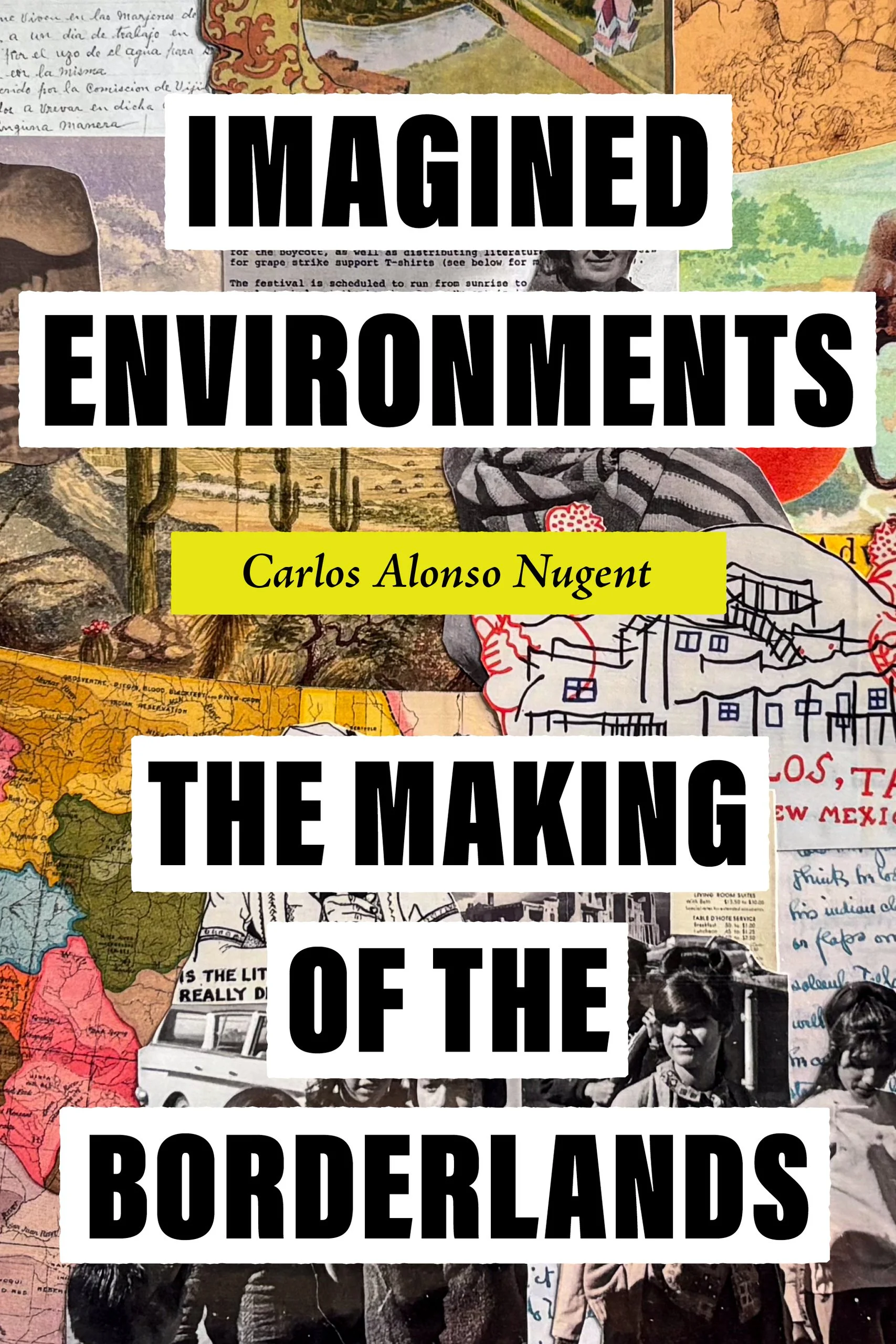
Casting light across the US–Mexico borderlands, this book reveals the region’s “imagined environments”—the frameworks through which its human groups have represented, related to, and resided in their more-than-human worlds. While these imagined environments can feel immersive and even immutable, I explain how they have in fact emerged in everything from Apache pictographs to US and Mexican laws to novels, poems, paintings, and photographs. By showing how the larger imagined environments have shaped and been shaped by such cultural constituents, I revise accepted accounts of relational racialization. Advancing from 1848 to the present, I demonstrate that whiteness has co-evolved with western water infrastructures, that Latinidades have developed through divergent forms of land tenure, and that Native nations have thrived not only by staying in specific places, but also by migrating across vast spaces. With such stories, I complicate the environmental humanities. Even as I argue that media have naturalized our use and abuse of the planet, I still explore how they have helped us love places we have never been and care for creatures we have never met.
Imagined Environments is appearing in Fall 2026 with the American Crossroads Series at the University of California Press.
Nuestra América: A Literary History of the Anthropocene
While my first book shows how imagined environments have shaped and been shaped by the borderlands, my second book will advance a new account of the Anthropocene—the geological epoch in which human societies have a dominant and even determining influence on our nonhuman environments. Climate scientists still disagree about the Anthropocene’s starting date, but they all see the significance of 1492, when Europeans began both a genocide against Native North and South Americans and a trade in enslaved Africans, which together fueled the rise of carbon-intensive capitalism. Much as scientists analyze the Anthropocene’s material traces, Nuestra América will wrestle with its cultural causes and consequences, exploring how the epoch has taken shape through four processes: exploración (exploration), extracción (extraction), cultivación (cultivation), and electrificación (electrification). Cognates in Spanish, English, and other colonial languages, these processes have sustained and been sustained by some of our most prestigious literature. However, they have always been confronted with alternative cultural practices—with texts, images, and other media for surviving on (without necessarily saving) our precarious planet.
By recovering some of these practices, Nuestra América will revise the prevailing paradigms of socio-ecological struggle. For decades, scholars have celebrated Black, Indigenous, and Latinx communities who have fought against environmental inequalities. All too often, though, they have defined these environmental justice activists as inheritors to—or imitators of—white environmentalists. Shifting such accounts, Nuestra América will trace literature and culture we might anachronistically call “Latinx” past twentieth-century environmentalism, past eighteenth- and nineteenth-century Romanticism, and all the way to sixteenth- and seventeenth-century colonialism. Engaging the epochal experience of “exploración,” one chapter will theorize the “eco picaresque” through both contemporary culture-makers like Oscar Zeta Acosta and early counterparts like Álvar Núñez Cabeza de Vaca. Considering conflicts around “cultivación,” another chapter will read Leslie Marmon Silko’s Almanac of the Dead (1991) alongside and against Mexicanx and Nuevomexicanx maps (1500–1700). Taking seriously José Martí’s suggestion that “trincheras de ideas, valen más que trincheras de piedra” (trenches of ideas are worth more than trenches of stone), the chapters will together highlight how Latinx literature and culture have exceeded both environmentalism and environmental justice—and how they can help us cope with fires in the Amazon, storms in the Caribbean, and crises throughout the Americas.